
Have you ever wonder about the importance of scents? The sense of smell is very powerful. Have you ever noticed how a certain smell can bring back vivid memories from your childhood? The nostalgia that comes with it shows just how strong our sense of smell really is. Whether it’s the smell of freshly baked bread, freshly cut grass or lavender, our sense of smell has the ability to transport us back in time.
Were you aware that our sense of smell can recall 35% of what we experience, while touch can only recall 1%, hearing 2%, sight 5%, and taste 15%?
It’s interesting to note that 75% of our daily emotions are influenced by our sense of smell. This explains why walking into work with a bad smell can put us in a bad mood, while a nice smell can have a positive effect on our day.
What benefits can scent bring?
- Improving your mood and feeling good with aromatherapy, which can help with stress and anxiety, or make a cozy and welcoming space. Proven advantages of pleasant-smelling surroundings.
- Boosting productivity and staying focused by enhancing concentration, fighting fatigue, and maintaining high energy levels all day long.
- Boosting brain function by improving memory retention or enhancing cognitive performance through stimulating brain processes.
- Reducing stress
- Improving sleep and rest
- Improving visitors’ impressions
I truly believe that current designs should focus on the human senses; sight, touch and … smell in order to create a positive environment and because of the importance of scents. Smell is really important for getting employees involved and setting the vibe in the office. The nice smell of the place sets the tone and helps get everyone in a good mood when they come in, which affects everyone’s mood for the rest of the day. Fortunately, big companies have picked up some good tips from hotels and stores and are starting to realize how important it is to use a unique scent to represent their brand. They’re using scent to make their staff’s experience better and to help them work better.
The results of research on scents
In the last two decades, there has been a lot of research focusing on the effects of scents on humans.
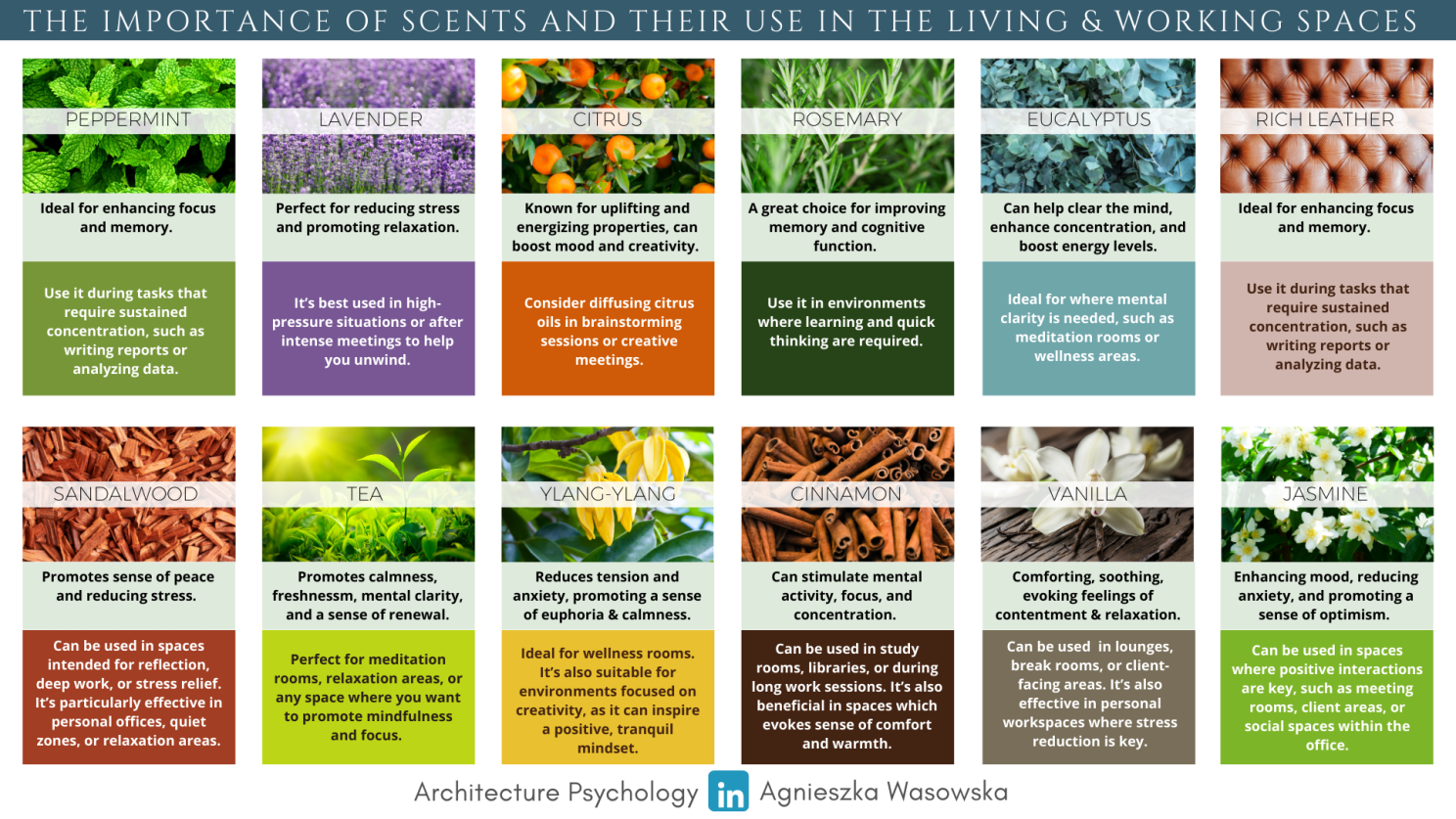
- In 2003, researchers examined how the smell of peppermint can affect cognitive performance, especially in tasks that require attention and memory. The research found that being around peppermint can help people do better on paperwork and stay more alert. They did the study by having some people around peppermint and others not, and those around peppermint did better. It seems like peppermint might make your brain work better because it has some kind of stimulating effect.
- In 2004, researchers examined the impact of ylang-ylang on mood and physiological responses. The study discovered that ylang-ylang lowered blood pressure and increased feelings of calmness, but also reduced alertness.
- A year later, researchers examined how vanilla scent affects sleep and relaxation. They discovered that vanilla can chill you out and help you sleep better, plus it makes you less jumpy. Vanilla is known for being cozy and soothing, so it’s no wonder people like to use it to create calming spaces.
- In 2010, researchers examined how lavender can help lessen anxiety in people going to the dentist. Lavender is known for being calming, and this research showed that it can really help in high-stress situations. The study involved patients in a dental office and found that those exposed to lavender felt a lot less anxious than those in a regular setting.
Practical tips for using scents in the office:
A lot of people enjoy the smell of freshly mowed grass, but not everyone does. For some, it brings back memories of hot summer days, while for others, it’s a trigger for allergies and feeling sick. Smells can mean different things to different people, and strong connections to past experiences can make people either love or hate a particular scent. So, how do you choose the right smell for your office?
- Before bringing in any smells to the office, it’s a good idea to ask everyone what they like and don’t like. Some people might have allergies or really don’t like certain smells, so it’s best to pick ones that everyone can enjoy and won’t bother anyone.
- Introduce smells slowly. Consider where you put different smells. Not every smell will be good in every spot. For example, you probably wouldn’t want the same smell in your lunch area as in your front office.
- Try out different smells, artificial scents won’t cut it. Bring in some plants to add a more natural aroma – without the overwhelming smell of fake scents. Think also of hand soap in employee bathrooms and even smelly cleaning products.