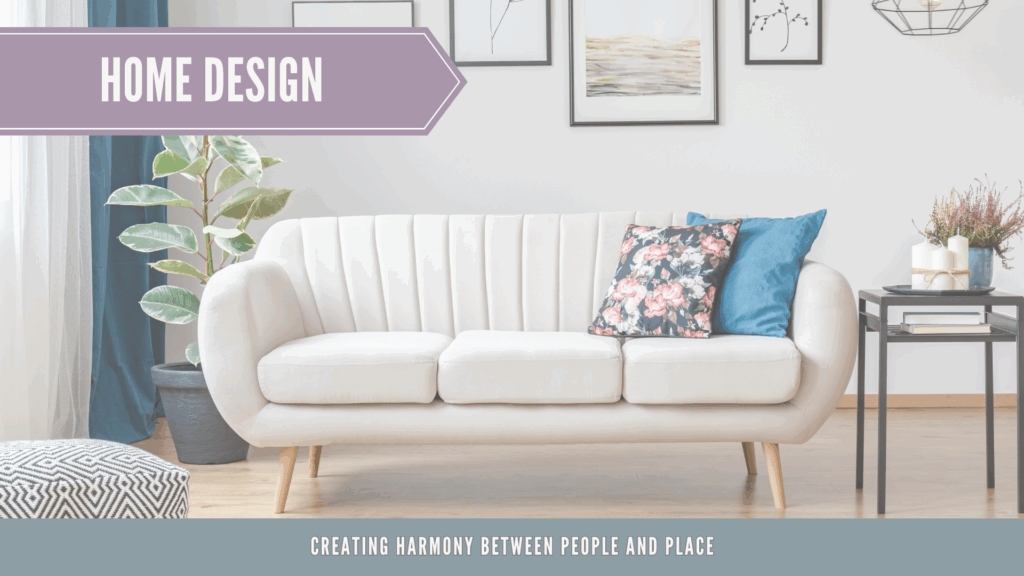

Imagine you’re furnishing a new living room. In your imagination, everything looks perfect, but once the delivery arrives, it turns out that the sofa takes up half the room and the table barely fits. Why does this happen? The answer lies in the psychology of perception, more precisely, in a phenomenon known as proportion bias.
Human perception does not work like a ruler. Our brain constantly interprets its surroundings using simplifications and mental shortcuts. We assess scale based on context: light, color, and other objects in the space.
In a showroom, a sofa appears light and proportional because it is surrounded by high ceilings, ample light, and other large pieces of furniture. Moreover, the lighting in furniture stores is carefully designed, often cool, with high intensity, even diffusion, and well-chosen angles of incidence. This type of lighting shapes the edges, eliminates shadows, and visually “cleans” the space, giving the impression of greater lightness, clarity, and scale.
In home environments, lighting tends to be warmer and more directional, and its intensity varies depending on the time of day and the type of lamps. All of this can cause a piece of furniture that looked “light” in the showroom to become overwhelming when brought into a home with low ceilings and a narrow entrance.
Our brain is constantly looking for reference points to estimate scale. When they are missing, or when they are disproportionate, mistakes are easy to make. Contrast plays a key role here.
A large piece of furniture placed against a bare, smooth wall may appear smaller than it really is. The contrast between large and small, between emptiness and density, affects our perception of size.
We have difficulty imagining a piece of furniture at its accurate scale, especially in an empty room. Our brain craves context, and bare walls do not provide it. That’s why we sometimes buy furniture “by eye,” only to regret it later.
Contemporary interior design trends often make the problem worse. Social media plays a particularly influential role here. Interior photos shared online are carefully framed, often retouched, and shot with wide-angle lenses, which distort real proportions and scale.
Users see beautiful, minimalist arrangements and subconsciously assume they will achieve the same effect in their homes. However, these images present not only different furniture but also an entirely different scale of space.
The psychological mechanism of social comparison, described by Leon Festinger, causes consumers to compare their interiors with those seen on social media, often overlooking crucial contextual differences. This can lead to disappointment, frustration, and poor purchasing decisions.
Furniture designed for catalogs or Instagram is intended to match a style, not reality. A “hotel-style” table, a “loft-style” sofa, or a minimalist lamp most often suit spaces the average resident doesn’t have.
But this is not only an aesthetic issue. Roger Barker, the creator of the concept of “behavior setting,” was already researching in the 1950s how the physical characteristics of space affect human behavior. He showed that certain behaviors appear or disappear, depending on how the space is designed. If a living room contains furniture that is too large, overwhelming, and restricting movement, residents use the room less frequently, gather there less often, and spend less time together.
Spaces where furniture is too large generate a series of micro-stresses. It becomes harder to move around, harder to put things down, and the floor is no longer visible, yet it is precisely the visible floor that increases our sense of safety and control.
How can we deal with it?
First, by measuring not just in centimeters, but also in terms of “spatial breathing room”, which means how much space is left around the furniture. The brain strongly needs “spatial breathing.”
It’s also worth creating cardboard mockups, marking furniture outlines on the floor with tape, or using VR apps.
Last but not least it’s worth learning to recognize showroom illusions:
- furniture placed on platforms appears slimmer and lighter than it actually is,
- placing it at a distance allows the whole object to be taken in visually, making it seem more proportionate and “smaller”,
- a background with a large window, which for our eye is essentially “non-referential,” eliminates scaling cues, making the piece appear less massive.